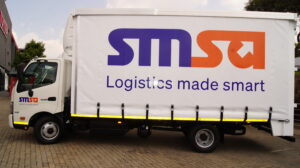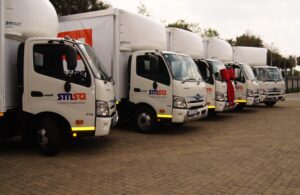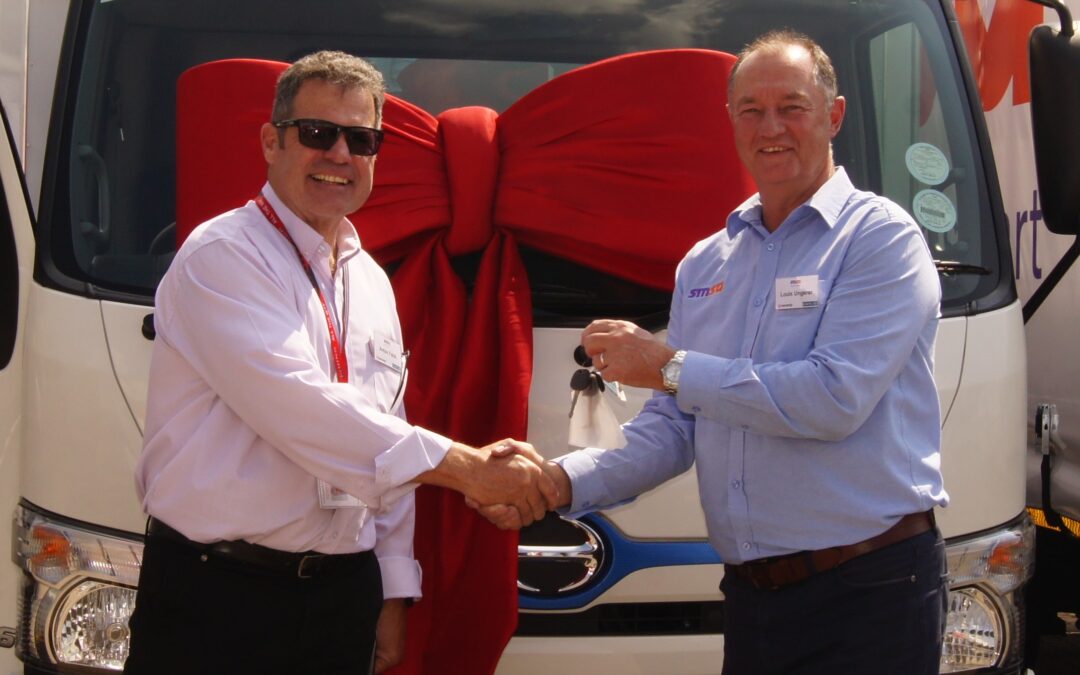
One to two years ago, HINO provided vehicles for NAMLOG (Namibia Logistics) to test in its operations. Since then, NAMLOG has gained a new investor and been renamed SMSA Africa Logistics Group. HINO and SMSA share a mutually beneficial relationship: SMSA is Toyota Africa Parts Centre’s (TAPC) logistics partner, and its fleet includes HINO vehicles. HINO has now handed over five new Hino 300 diesel hybrid trucks to SMSA’s Louis Ungerer to strengthen TAPC’s distribution capabilities, a significant part of which is managed by SMSA.
After a successful initial trial of the Hino 300, SMSA added five more vehicles to its fleet. The trial confirmed the uptime required for logistics operations and delivered fuel savings of about 19% on urban routes. The vehicles also support SMSA’s efforts to reduce its environmental impact, while drivers have welcomed the hybrid technology because it feels familiar in everyday use.
HINO South Africa Vice President Anton Falck recently spent a week driving the Hino 300 diesel hybrid across the country. He found it comfortable and easy to handle, with a manageable turning circle and a driving feel closer to a passenger vehicle than a truck.
HINO benefits from TOYOTA’s daily—and sometimes twice-daily—deliveries to dealerships. This enables dealers to stock fewer parts, save space, and still receive orders promptly. A dependable logistics partner is therefore vital to keeping HINO vehicles on the road and avoiding repair delays caused by parts shortages.
“KINTO’s fleet management and leasing partnership gives logistics companies a comprehensive alternative to buying vehicles outright. The package includes servicing and insurance, as well as an option to purchase the vehicles at the end of the lease,” concluded Falck.
Speaking for the Japanese management team, Yazeed Ebrahim said: “Toyota has established global environmental goals for its subsidiaries, including cutting CO₂ emissions, conserving water, increasing recycling, and supporting harmony with nature. TAPC has adopted these goals and is implementing several on-site initiatives. Its 3.4-megawatt solar plant and 6.4-megawatt-hour battery system provide 80% of the facility’s energy, with the grid supplying the remaining 20%. Electric warehouse equipment, including forklifts, further increases the use of solar power and reduces emissions.”

At the TAPC facility, rainwater is collected in underground tanks with a stated capacity of two million for irrigation and floor cleaning. We are proud that 98% of on-site waste is separated for recycling. Because the facility borders a wetland, Toyota actively supports its rehabilitation and has made the area’s preservation a key priority.
As part of its sustainability targets, TAPC maintains schedules across its upstream and downstream logistics network. Each day, 52 trucks leave the facility with about 10 000 parcels for 330 delivery points nationwide, travelling an average of approximately 60 000 kilometres.
“At SMSA, sustainability is central to operational performance and to building a stronger, more resilient business for the future,” said Louis Ungerer, Managing Director of SMSA.

“The successful trial proved that sustainability and efficiency can reinforce one another, improving operations while benefiting the communities and environment in which we work. Our customers expect reliable, efficient, on-time deliveries, and choosing the right vehicles is critical to meeting that commitment. By investing in practical, proven technology, we are creating a fleet equipped for both current needs and future expectations. We are pleased to continue our partnership with HINO and to work with KINTO as we take these next steps,” concluded Ungerer.